
Inside China’s Fitness Supply Chain: Scale, Precision, and Agility for Global Brands
Inside China’s Fitness Supply Chain: Scale, Precision, and Sourcing Agility for Global Brands
By IWF Industry Insights Team
1. The Power of Specialized Clusters
According to trade statistics from the General Administration of Customs of China (GACC, HS Code 950691) and Grand View Research, China manufactures over 60% of the world’s strength and cardio equipment.
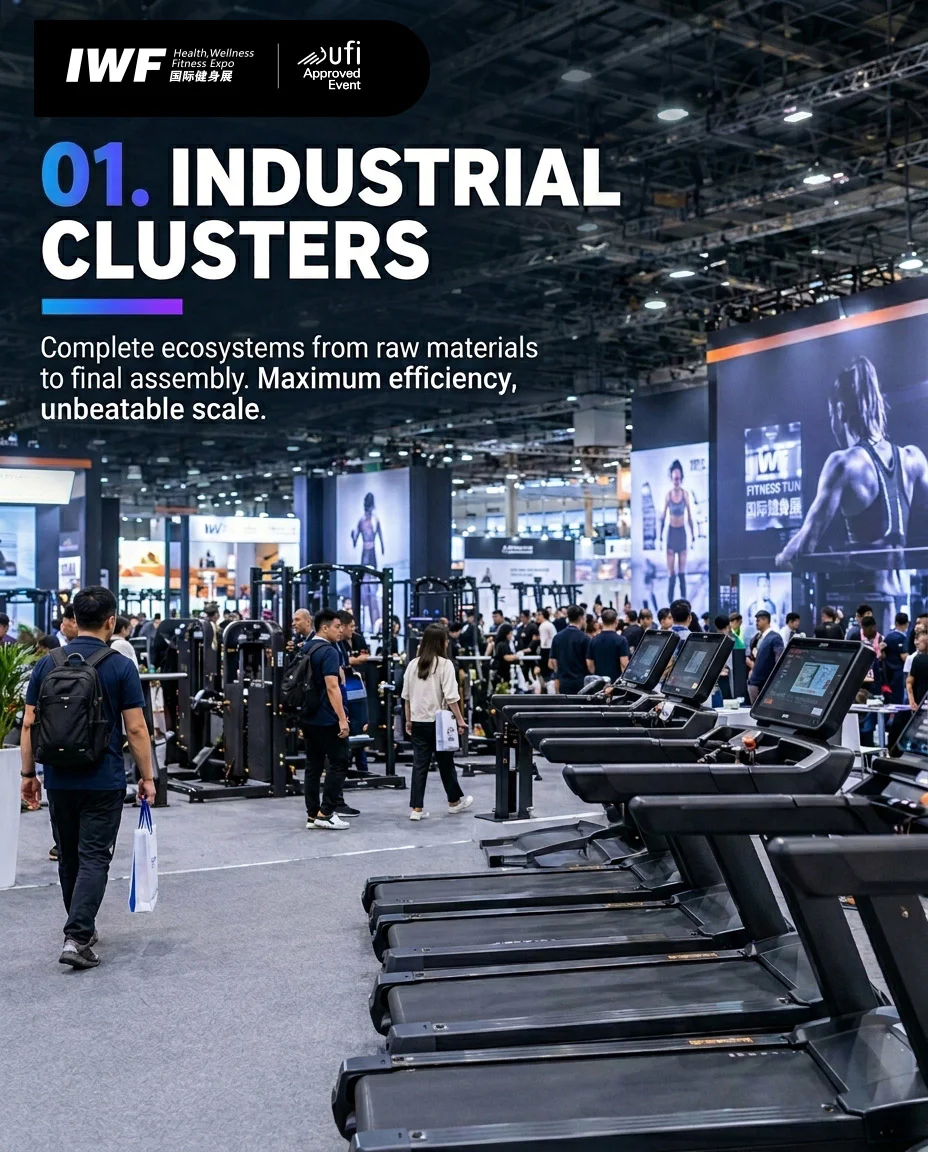
This market concentration is powered by geographically specialized manufacturing hubs. In Shandong (Dezhou), heavy-duty commercial strength machinery dominates; in Jiangsu (Nantong), free weights and accessories lead; while Zhejiang (Yongkang) focuses on motorized cardio systems. Operating within a tightly integrated 50-kilometer supply radius, these dedicated industrial clusters allow raw steel suppliers, component manufacturers, and precision finishing lines to collaborate seamlessly—minimizing supply disruptions and offering overseas buyers unmatched economies of scale.
2. Advanced Engineering & International Compliance
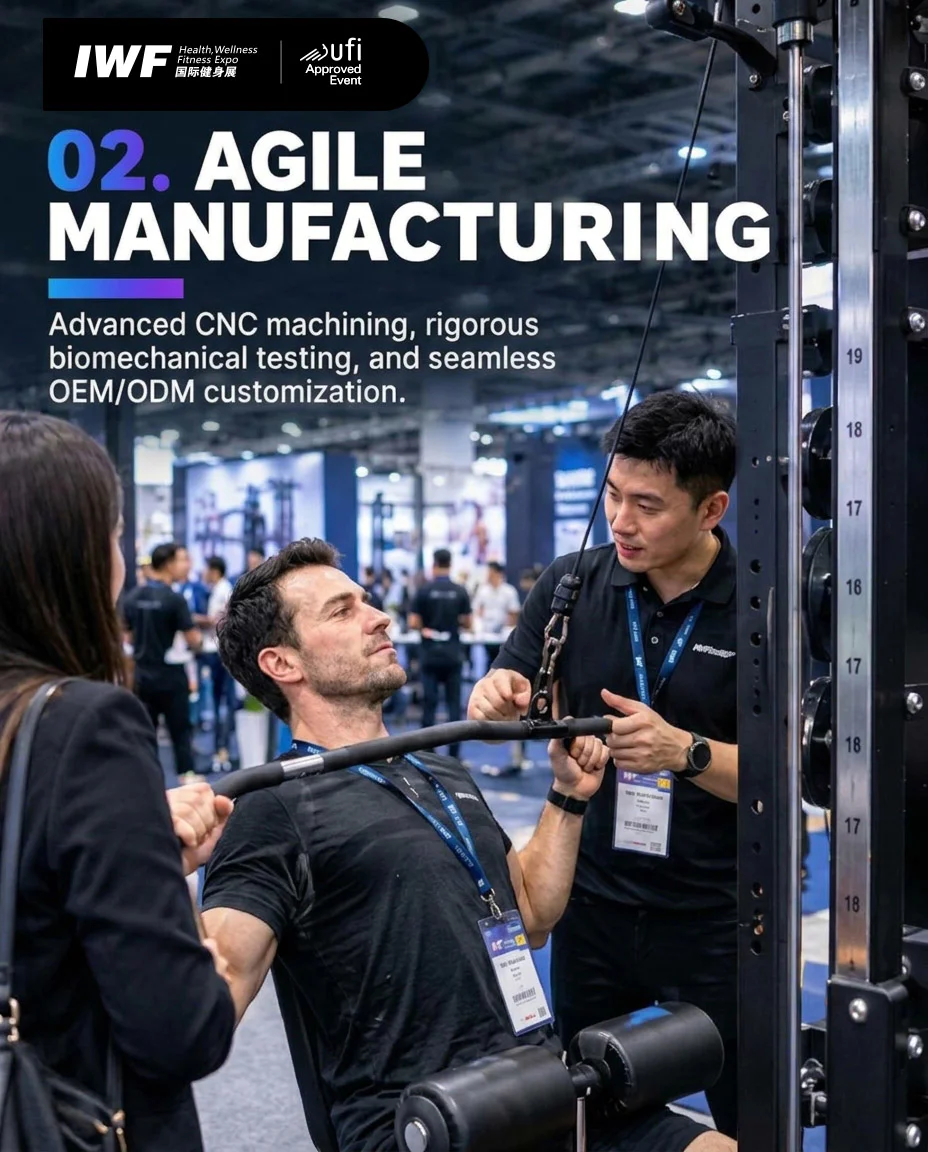
Precision engineering has replaced manual assembly across top-tier Chinese facilities. Exhibitors at IWF Shanghai—ranging from OEM pioneers to leading commercial brands—leverage state-of-the-art CNC laser cutting, automated robotic welding, and electrostatic powder coating systems.
For international distributors and commercial facility operators, structural safety and biomechanical accuracy are non-negotiable. Leading factories design and build equipment strictly aligned with EN ISO 20957-1 (the European benchmark for stationary training equipment) alongside ISO9001 quality management standards and CE/RoHS directives. This rigorous compliance ensures smooth kinetic motion and reliable performance under high-intensity usage.
3. OEM/ODM Agility: Reducing Time-to-Market
Global procurement teams face constant pressure to shorten product development lifecycles. Industry benchmarks from Mordor Intelligence indicate that Asia-Pacific’s integrated OEM/ODM networks can reduce physical prototyping cycles by up to 30% compared to traditional decentralized setups.
Utilizing 3D CAD modeling and modular manufacturing lines, Chinese suppliers convert custom specifications into functional, field-tested prototypes within 14 to 21 days. Direct factory partnerships established through audited trade platforms eliminate multi-layer distributor margins, delivering direct procurement savings of 15% to 25% for brand owners.
4. Direct B2B Access at IWF Shanghai
As global buyer requirements shift toward flexible minimum order quantities (MOQs) and custom product lines, having direct access to verified manufacturers is critical.
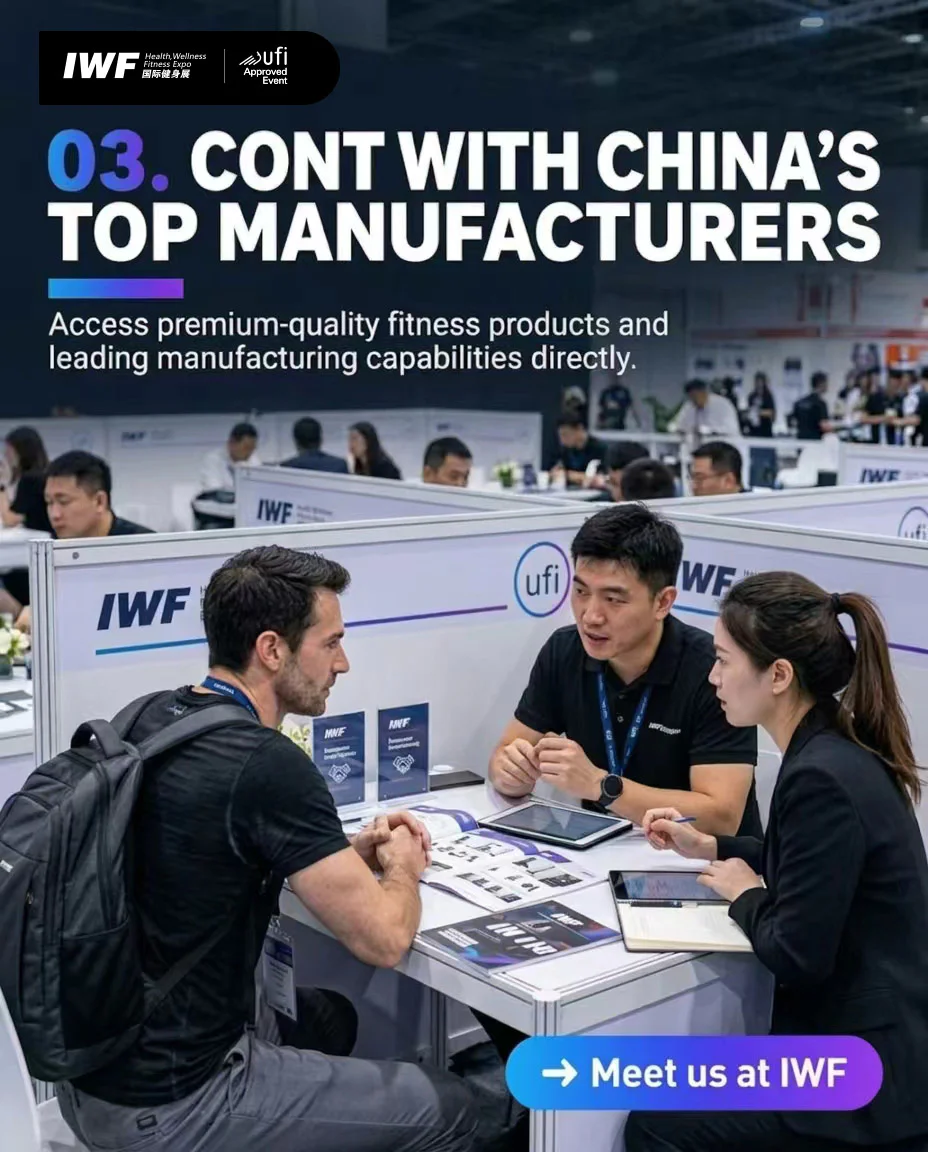
As a UFI-Approved Event—independently audited by The Global Association of the Exhibition Industry—IWF Shanghai connects thousands of international buyers directly with audited Chinese factories, engineering teams, and export specialists. Through structured B2B Matchmaking programs, global sourcing professionals can evaluate real-time manufacturing capabilities, verify factory certifications, and secure resilient supply agreements for the coming seasons.
References & Data Sources
1. General Administration of Customs of China (GACC) – Export Statistics for Physical Exercise & Gym Equipment (HS Code 950691).
2. Grand View Research & Mordor Intelligence – Global Fitness Equipment Market Size, Share & OEM Supply Chain Analysis.
3. European Committee for Standardization (CEN) – EN ISO 20957-1: Stationary Training Equipment General Safety Requirements & Test Methods.
4. UFI (The Global Association of the Exhibition Industry) – International Trade Event Auditing & Verification Framework.